
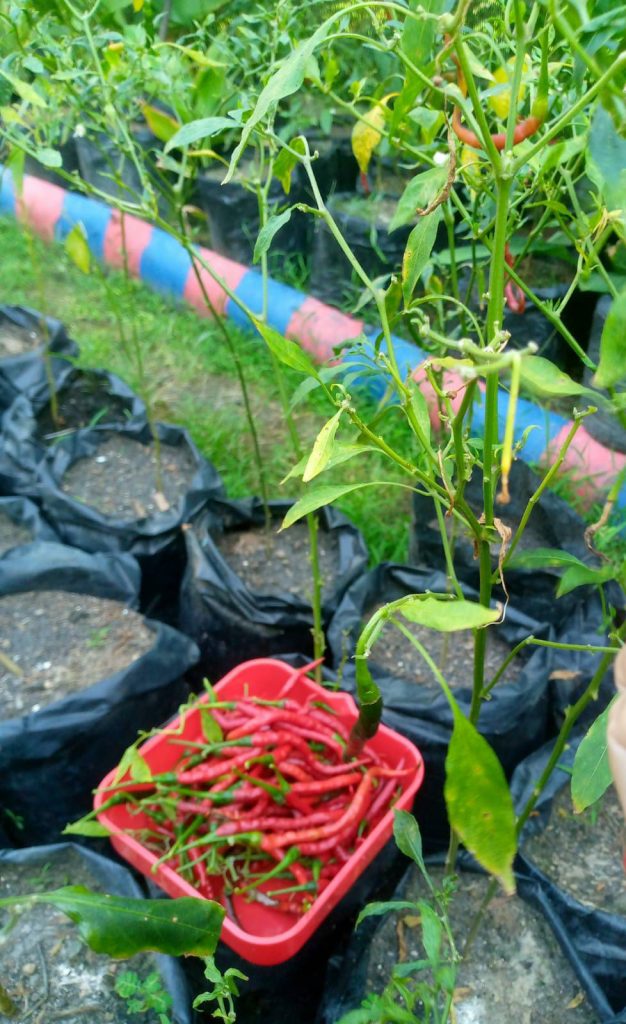
Chili (Capsicum annuum L.) is a horticultural commodity with high economic value and
continuously increasing market demand, both nationally and internationally. However, the success
of chili cultivation heavily depends on the planting medium used, especially in modern agricultural
systems like hydroponics and polybags. One alternative planting medium that is now widely used is
cocopeat, which comes from coconut coir powder.
What is Cocopeat?
Cocopeat is an organic by-product of coconut coir processing. Its texture is similar to soil with
very high water absorption and good porosity. The advantage of cocopeat lies in its ability to retain
water and provide sufficient air space for plant roots, making it very suitable for horticultural
planting media. Not only that, cocopeat is also known to have very good physical and chemical
characteristics for planting media, making it an environmentally friendly and sustainable choice.
A. Benefits of Cocopeat in Chili Cultivation
a) Increases Water and Nutrient Availability
Cocopeat can hold water up to 8-10 times its dry weight, so chili plant roots do not easily
experience drought. This moisture is very important, especially during the initial growth
phase of the plant.
b) Loose Media Structure
The porosity of cocopeat allows for good air exchange around the roots, which helps
increase root respiration and nutrient absorption efficiency.
c) Neutral to Slightly Acidic pH
Cocopeat has a pH of about 5.5-6.5, which is suitable for chili growth. With this pH, macro
and micro nutrients are available in a form that is more easily absorbed by plants.
Effect on Chili Plant Growth
The use of cocopeat as a planting medium has been proven to have a
positive effect on the vegetative growth of chili, including:
a) Significant increase in plant height
b) Increase in the number and size of leaves
c) Healthier and more extensive root growth
d) Acceleration of flowering and fruiting time
Studies show that chili plants cultivated with a cocopeat media mixture (either pure or mixed with
rice husk charcoal, soil, or compost) show better growth performance compared to regular soil
media.
Effect on Production and Harvest Yield
The effect of cocopeat is not only seen in growth but also impacts harvest yield:
a) More fruits produced
b) Larger and more uniform fruit size
c) Better water content and fruit color
d) Overall increase in plant productivity
With an optimal planting medium like cocopeat, chilies can be harvested faster and in higher quantities,
benefiting farmers in terms of both quality and quantity of results
Conclusion
Cocopeat is an effective and environmentally friendly alternative planting medium for improving the
quality of growth and production of chili plants. With its ability to store water, provide oxygen, and
maintain pH stability, cocopeat can create optimal conditions for plant growth. The wise use of cocopeat,
especially in urban or hydroponic agricultural systems, becomes a smart solution for increasing the
productivity of horticultural crops, including chili.